Featured

What It Is Like Going Through First Steps in Music and Conversational Solfege Levels 1 & 2 Certification Courses

I was first introduced to the works of John F. Feierabend from my cooperating teacher back when I was student teaching. I had owned many of his different books, such as The Book of Echo Songs, but never knew there was an entire curriculum! The Heart of America Orff Association in Kansas City has many wonderful music educators come and do trainings with local teachers and when I saw John Feierabend on the list, I knew I needed to go! The day with Dr. Feierabend was a one day run-through on the First Steps in Music curriculum, and let’s just say, I drank the Kool-Aid! I felt like the philosophies of Music Education Dr. Feierabend was speaking on were right in line with my views. I started teaching the whole First Steps curriculum the week after that day training, but I knew I needed more. Luckily, The University of Central Arkansas was offering a five-day First Steps in Music Certification course and I signed up immediately. Here is a link to all the current Feierabend courses and events, while the biggest chunk are finalized around February and March for summer certification courses!

So let’s say you’ve signed up for a course. What is it like? It’s honestly extremely fun and a great way to make friends with other music teachers! I stayed in a dorm room for the week (costing around $25 per night) and got to hang out with the other teachers in the evenings!

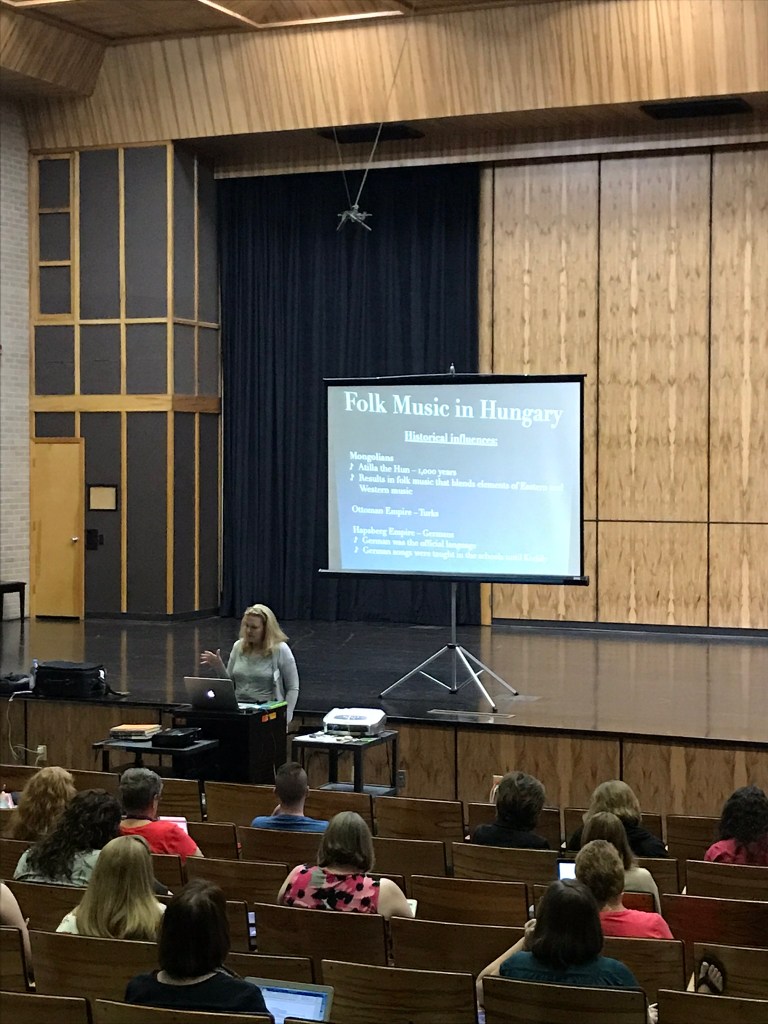
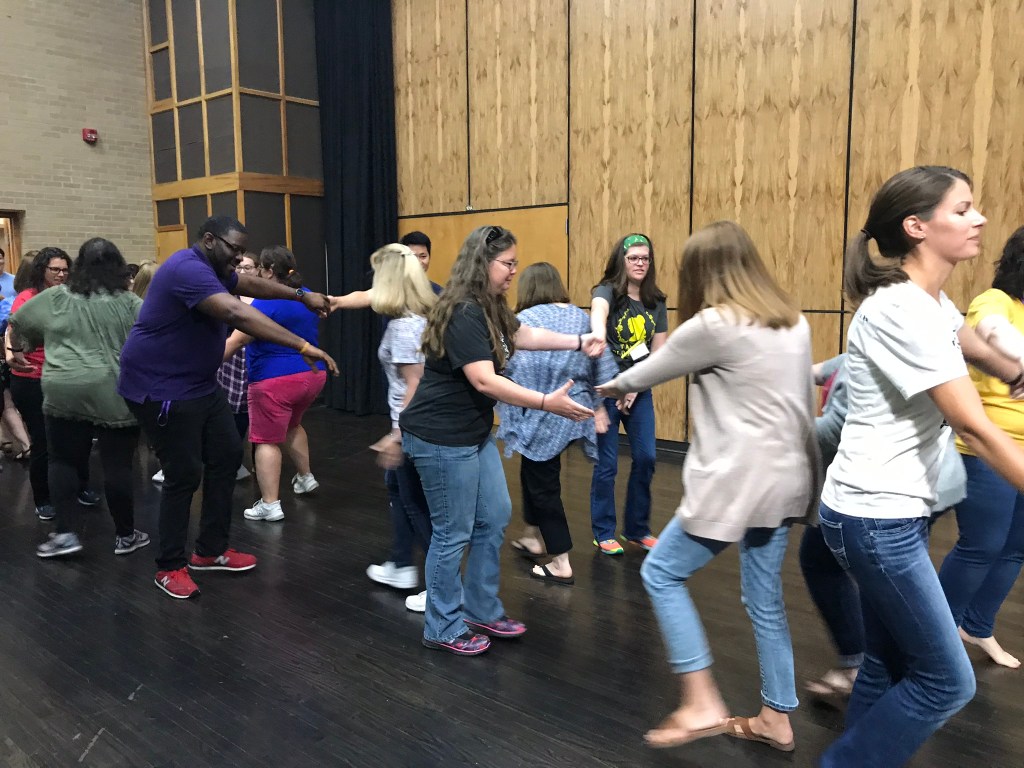
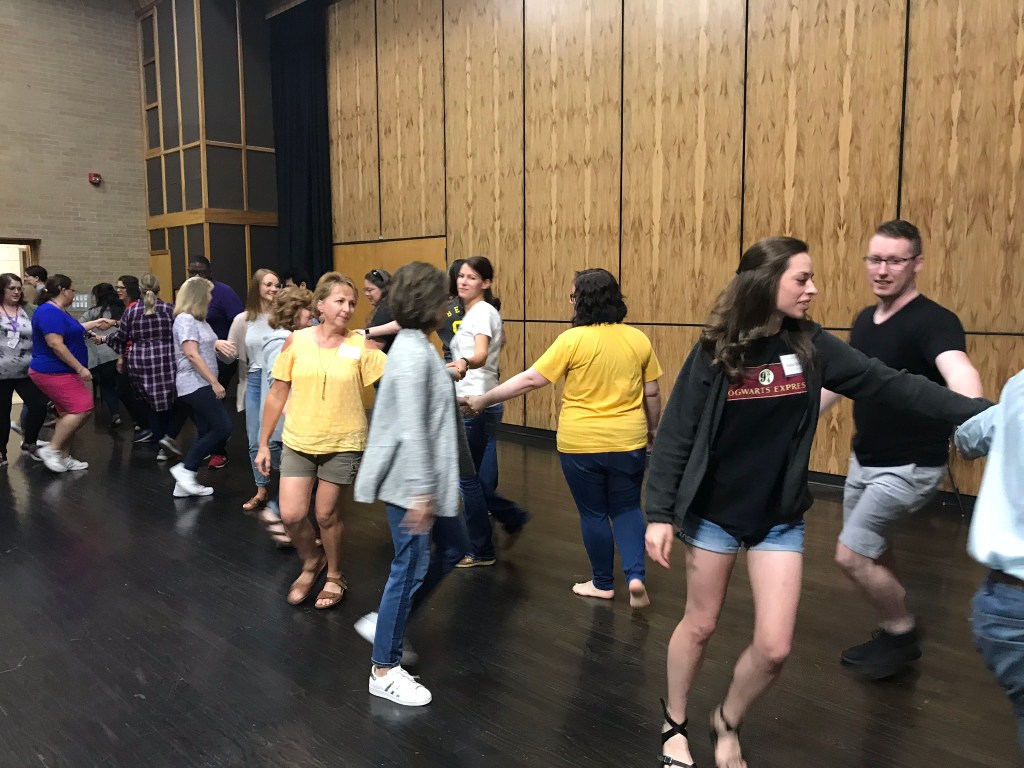
My teacher training was Chris Obida Powers, and she was a student of Dr. Feierabend at the Hartt School of Music. In both First Steps and Conversational Solfege trainings, Chris started every morning and afternoon with a Tuneful round, Beatful dance, and an Artful Move It activity. It was great to gather a huge arsenal of new rounds and dances to bring back to my students! During the sessions, Chris took teachers through every step of the curriculums in depth! She gave us many examples for each step and we participated in those warm-ups, songs, movement activities, and games. In addition, she gave us tips on how to best teach each step of the curriculums. For the First Steps training, Chris even spent a whole day with us on the First Steps for Infants and Toddlers curriculum, so that we could teach our littlest music makers to be Tuneful, Artful, and Beatful! In the Conversational Solfege Training, we learned the extensive histories of all the pedagogies that influenced Dr. Feierabend’s work, such as the teachings of Zoltan Kodaly and Edwin Gordon.

We had a few assignments for each training that were graded by Chris, but they were given to set up a solid foundation so that we could do these tasks on our own when we left training. For both trainings we created Unit Plans where we picked out appropriate songs for each step of the curriculum and which days in our plans we would teach each part of our unit. For Conversational Solfege, we also made an example of a lesson plan that included Tuneful, Beatful, and Artful activities and how we would start and end with some fun for each lesson.

We also had a test for both trainings, which basically insured that we understood the non-negotiables of each curriculum and how each Unit was set up. The tests were a bit intimidating, but not too scary (everyone passed)!

Our final project was to teach the class an activity to go along with the curriculum. For First Steps, I taught a small lesson on Arioso with puppets to the other teachers. For Conversational Solfege (CS), I created a dance to go with the round Ghost of John and taught this dance to the teachers. This dance goes along with Unit 7 of CS. Chris was amazingly encouraging during this process and treated everyone with respect. She truly wanted to help us hone our crafts and she was not intimidating in the least! Here is the video of The Ghost of John! You can see me in the middle as the conductor. I’m very proud of how this turned out, as it’s beautiful to listen to and watch!

I asked my friend, Eric Bottorff, that I met at the Conversational Solfege training “Why would you recommend teachers go to the First Steps and Conversational Solfege Trainings? What were you favorite things about the trainings?” Eric replied back:

I think a huge benefit to go to the trainings is that, if you truly follow along, it forces a mindset change. Since music teachers are very often so separate from other music teachers and can be seen as separate from the staff at our schools, it is easy to get in a flow and feel, “That is just the way I do things” without questioning WHY. The trainings are very social and while you do learn the specifics of the Kodaly and Feierabend methodologies, you share approaches and strategies from other classrooms that might work as modifications to the methodologies.

Eric Bottorff

Eric is completely right! We had a class Padlet where we shared some of our best teaching tips and tricks, along with our favorite resources. It was wonderful to learn from other music teachers and to share with others!

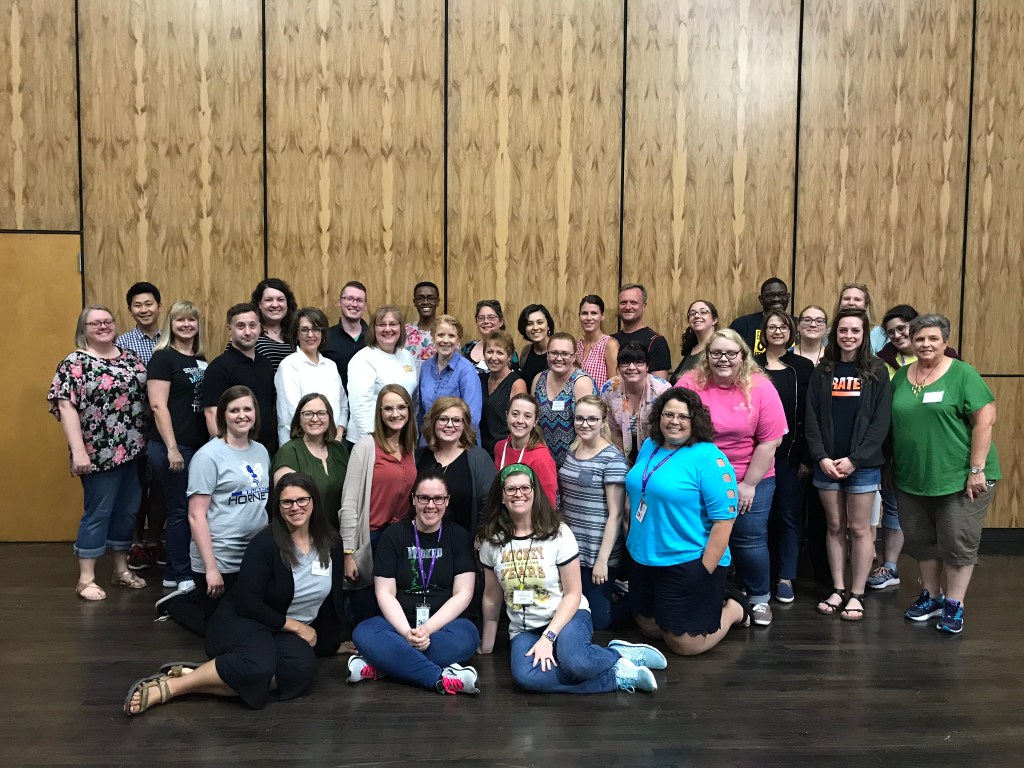
I would HIGHLY recommend every music teacher to look into both the First Steps and Conversational Solfege certification courses. They have both helped me become a much better teacher than I was before and I’ve made some fantastic friends. Below is a gallery of some photos from the trainings!
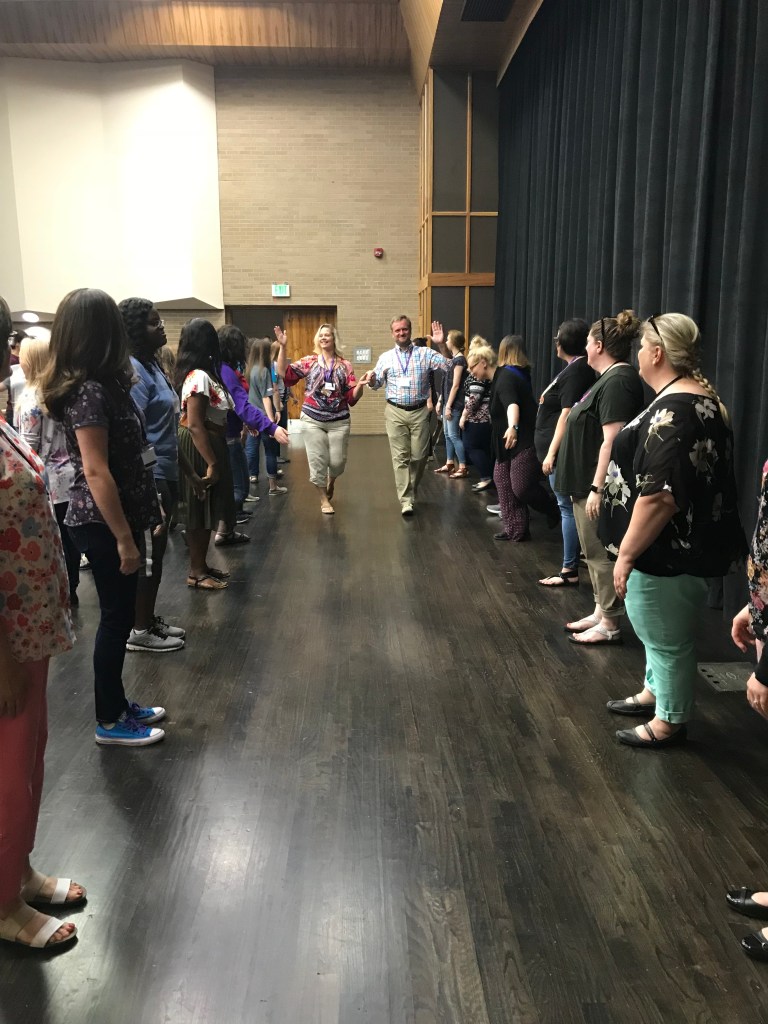
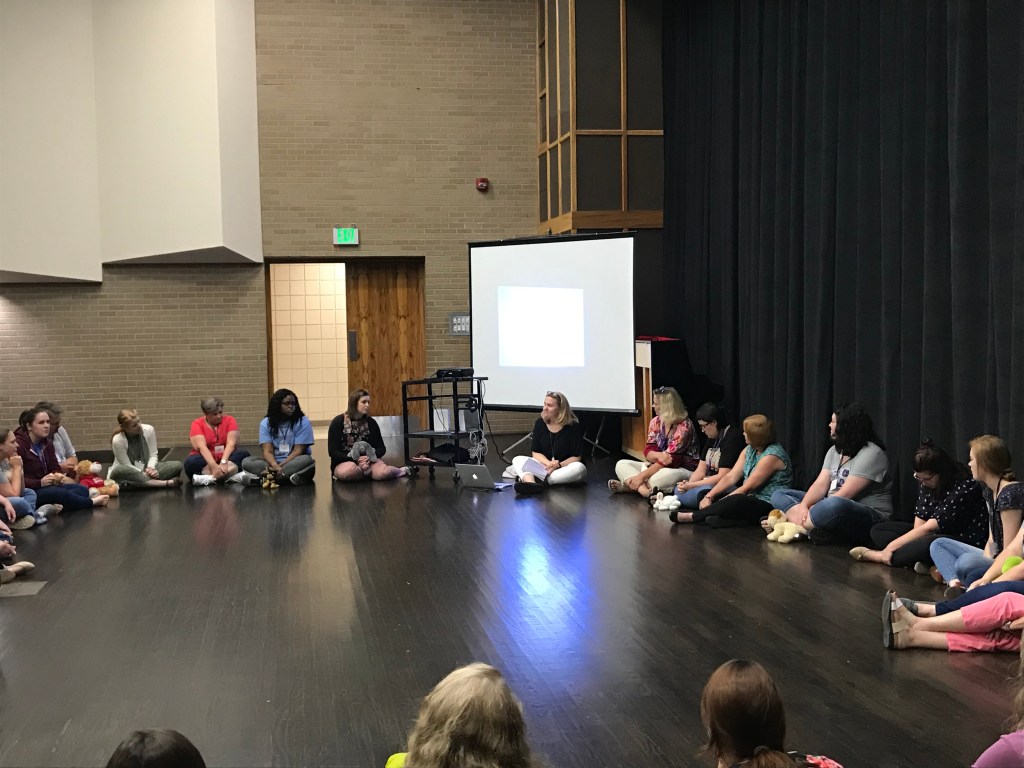
If you have any further questions about the certification courses, feel free to ask in the comments! If you’ve been to a certification course, what was your favorite activity?
My Experience Giving the Primary Measures of Music Audiation (PMMA) Test to Measure Tuneful and Beatful Aptitude for the First Time

I gave this post a long title, but the Primary Measures of Music Audiation (PMMA) is a pretty important aptitude test to give to kids grades K-3. I first heard about this test when I got my certifications in both First Steps in Music and Conversational Solfege with Chris Obida Powers at the University of Central Arkansas. Chris is a fantastic teacher trainer and many teachers use the PMMA to track student’s rhythmic and tonal aptitudes (potential), as well as growth over the first years of music. Edwin Gordon, the creator of the PMMA and Music Learning Theory, found that the most growth in a child’s musical aptitude happens in Kindergarten when given a quality music education. Likewise, if there is no quality music during Kindergarten, a child’s musical aptitude will sink significantly (Feierabend, et al., 2018, p. 359). This is a huge reason why early music education is vital (in utero-age 5)! For more information on musical aptitude: https://giml.org/mlt/aptitude/

Before I gave the PMMA for the first time, I talked to my friend, Eric Bottorff, who has given the test for a few years. Eric told me that I should be practicing same/different (not the same) with my students prior to giving the test. I practiced for a few weeks with my students by playing different tonal and rhythmic passages on my piano. If they thought the passage was the same, they showed me 2 closed fists. If they thought the passage was different, they showed me one closed first and one open hand. This directly tied into the test as students identify same and different passages by either circling the 2 smiling faces or the smiling/frowning faces.

If you watch the instagram video above and scroll through the pictures, you’ll hear an example of a question on the PMMA and you will see what the test looks like. The test also includes some practice questions at the beginning that we did together so that students knew how to correctly take the test. I had read in the Feierabend Fundamentals group on Facebook that it was best to have your students on the perimeters of the room facing the walls so that they were not looking at each other’s tests. Another tip I read was to give a few tiny brain breaks throughout, as students tend to blank out during the 15-minute test. Sometimes it was just me asking what the next question was, sometimes it was doing a few vocal call-backs, and sometimes it was getting up and doing some jogging/stretches.

I ended up giving the test to my first, second, and third grade students this go around. I will give the test to Kindergarten in March, after they’ve matured a bit in their test-taking skills. The first set of data I got back from my students was fascinating! The main uses of this data is to first, track growth. If my students are not showing any growth, it will mean that I need to change the way I’m teaching! Next, it will show me where I need to give my students extra attention/opportunities for beat keeping activities and solo singing to help raise their tonal and rhythmic aptitudes. Last, if some of my students are consistently scoring high, I can communicate to their parents that they would highly benefit from enrichment opportunities such as piano lessons, community theater, etc.

To make the experience better in May, I will be talking to the ESL teacher at my school and will create a Spanish version of the test. It will be the pictures on each question labeled with their Spanish name (I will speak it in Spanish), and I will also be labeling the words same and different in Spanish. My school has become the ESL center in our district and I noticed about 7 of our newer English speakers created patterns on their tests (same, different, same, different), which doesn’t truly show their real musical potentials. I can also have these students sit close to me so that I can help guide them.

Do you give the PMMA? If so, do you have any tips/tricks?

Feierabend, J. M., Strong, M., Boyle, K., Feierabend, L., Greene, B., Greenwood, C., … Schall-Brazee, S. (2018). Feierabend fundamentals: history, philosophy, and practice. Chicago: GIA Publications, Inc.

___________________________________________________________________

For my Master’s class “Leading in the Digital Age”, we are asked to discuss digital ethics and online reputation. I made a list of my Top 10 Rules:

  • Only post about your students in the best light possible.
  • Communicate with parents in multiple ways (both digitally/sending papers home).
  • Always install ad-blockers on your computer, especially one used to display information to the class. (I use Chrome and use the ad-block extension. I never have to deal with youtube ads or pop-ups!)
  • Assume others are reading your emails and texts.
  • Do not “friend” students and parents on your personal social media accounts. If you have a public teaching account/page, that would be an acceptable spot for parents to follow you!
  • Always cite your sources! I try to link to helpful sources in my blog or credit where I have gotten ideas from.
  • Keep high-stakes communication to face-to-face conversations.
  • Document. Document. Document.
  • Protect your students’ digital privacies.
  • Preview all apps and websites before you have students use them.

What would your rules be to protect your reputation and behave ethically in the digital age?

Adding Puppets to your Tuneful, Beatful, and Artful Music Class!

My love of puppets started when I was in 5th grade. My church started a puppet program for the older elementary kids while our parents were in church choir practice. Every week we practiced hand-strengthening exercises (such as squeezing tennis balls) and endurance exercises (holding our arms above our heads in preparation for the puppet theater). I did not realize I was good at puppets until we had auditions for characters for our puppet musical for Daniel in the Lion’s Den. I guess my puppetry was precise and expressive enough, that I was cast as the narrator. I remember during our performance that my little 11-year-old arms were getting so tired that I often switched out my arms in the middle of songs to give my other arm a break (often making my puppet droop in the process). I had a fun time in our puppet program and it wasn’t until I started student teaching in general elementary did I think of how to use puppets in the music classroom.

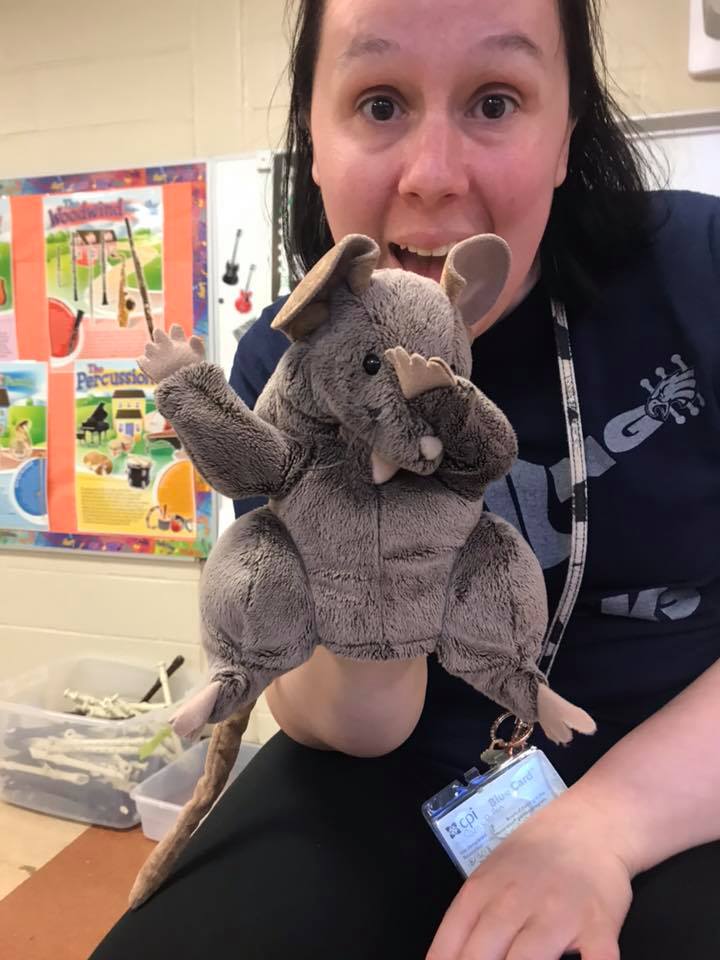
My favorite puppet is a mouse puppet made by Folkmanis. I’ve had him for 6 years and my current 5th graders named him “Cheeser” when they were in Kindergarten. It’s just stuck! I prefer puppets with moveable mouths, as I can do syllable movements when the puppets sing or talk. I like Cheeser the most of all my puppets because I can be very expressive with both his mouth, arms, and hands.

Cheeser doing The Dab.

For my youngest grades, I use puppets to help teach the Arioso (child-created tunes) Step in the First Steps in Music curriculum. I have my puppet and I take turns creating our made up tunes, demonstrating how to be both tuneful and artful in the process. As the students get older, they get to pick whether or not my puppet and I create fast/slow or happy/sad songs. I like to play up the drama! Questions I always ask my kids after I demonstrate:

  • Did the puppet and I use a talking voice or a singing voice? (Singing voice!)
  • Did the puppet and I sing the same thing or a different thing? (Different!)
  • Did the puppet and I sing at the same time or did we take turns? (Take turns!)

I demonstrate how to do Arioso with the puppet and I for 4 lessons before I have the students take my place. It’s now the puppet and them creating the songs together! I’ve noticed that children tend to do anything for a puppet, as the puppet feels “alive” to the littles. The kids also like giving the puppet a high-five after singing (Cheeser has such high-fiveable little hands!)

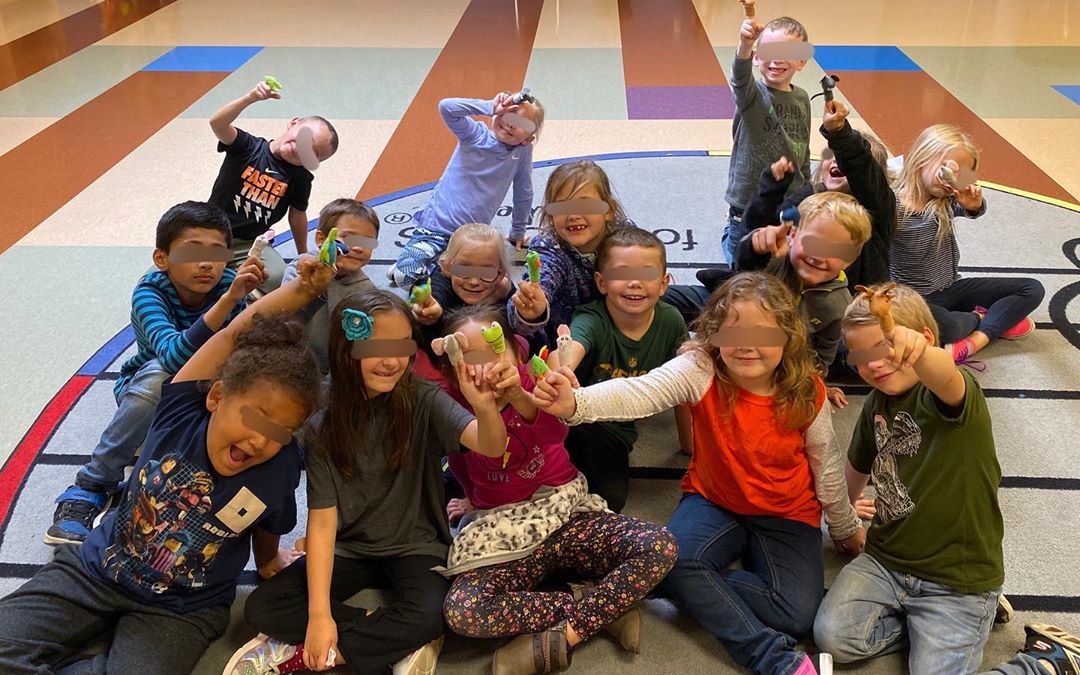
I bought finger puppets at IKEA and have so far used them for my students to do Arioso in pairs. I handed out the finger puppets and my students had to find the student with the same puppet as them as that was their partner. Here’s a particularly tuneful pair in action from one of my First Grade classes!

Another Arioso idea is I like to have a student pick out one of the puppets from my puppet tree and then I have my students sing questions to the puppet. Each puppet has their own personality. My seal only replies in varying styles of the word “Ort!”; my chicken will only “bock!” back; the cheerleader is very bubbly and outgoing; the chef a-talksa-likea-an-Italiana-mana and likes to do chef’s kisses with his hands; and the fox, Ferdinand T. Fox, will answer in an English accent.

Another great use of puppets is to demonstrate “Call and Response” type songs, where the teacher sings the “Call” and the class sings something different from the teacher, known as the “Response”. Sometimes my kids will follow the puppets cues and sing “with” the puppet during the response. I also used them to demonstrate Step 5 in Conversational Solfege with my older students, where they have to say a different rhythm than I do.

I sometimes use puppets as motivational tools:

  • The puppet is the audience to their music-making
  • The puppet is looking for students making good choices
  • The students get to “pet” the puppet if everyone lines up with correct procedures

My favorite brand of puppets by far is Folkmanis. Their animals are extremely realistic and the quality can’t be beat. I have gotten Folkmanis puppets funded through http://www.donorschoose.org or use a bit of my budget if I have some to spare. I’ve recently explored ebay and have found many great deals on new and gently used Folkmanis puppets! I like to search “Folkmanis Hand Puppets” and then sort by Price Low to High.

Let me know in the comments how you use puppets in your classroom or what your favorite puppet is! Stay Tuned for next week, as I will be blogging about giving the Primary Measures in Music Audiation (PMMA) test for the first time! It’s been a doozy!

Stay Tuned…

Coming soon to my blog I’ll have posts about:

  • Adding puppets into your lessons (with student feedback)
  • Tips on saving your singing voice
  • My experience giving the Primary Measures in Music Audition (PMMA) Test for the first time
  • What it’s like going to First Steps in Music and Conversational Solfege trainings
  • and more! (whatever tickles my fancy!)

Introduction

The mission behind this blog is for me to share with other music teachers and my local community what is happening in my music classroom! I’m constantly learning new ideas and techniques to bring to my students and I want to share with you the good, the bad, and the ugly. Sometimes a lesson may be a hit, sometimes it may flop and I want to be transparent and share how I get through those times. My teaching philosophy best aligns with that of Dr. John Feierabend and I’ve been certified in both First Steps in Music and Conversational Solfege. I’m in my second year of teaching First Steps and trying out Conversational Solfege for the first time this year. I’m already making tweaks as I go along and seeking feedback from other music educators. Here are a few resources to check out for more information on both First Steps and Conversational Solfege:

About Me

My name is Carrie Patton and I’m a music educator! I went to the University of Missouri-Kansas City and graduated with my Bachelor’s of Music Education. I’m currently getting my Masters degree in Curriculum and Instruction at Northwest Missouri State University. I’m currently in my seventh year of teaching at an elementary school and I’m having a blast! My main philosophy of Music Education is to shape all of my students into Tuneful, Artful, and Beatful kids who are able to partake in music throughout their lives, find an appreciation for music, and to pass down that love to the next generations. I’ve gotten certifications in both First Steps in Music and Conversational Solfege (American Kodaly), which are both pedagogies of Dr. John Feierabend. Most of my posts will be coming from the viewpoint of both of those curriculums!

For fun I like to read books, play the clarinet and ukulele, play video games, figure out new make up techniques, travel, try new foods, cook, and watch way too much Netflix and Youtube.

Design a site like this with WordPress.com
Get started